Monday, February 18, 2013

Mesothelioma Dominates As Highest Cost-Per-Click Keyword in 2013


Want to know who is paying the most for the Pay-Per-Click (PPC) Advertising? Look no further than the legal industry that now holds the top 50 spots! 


Two years ago we reported on this blog that of the top 50 results, 6 included the word “mesothelioma”  - with the #1 spot going to San Diego…which comes as little surprise with their history of ship building. We also noted that: 21 or the top 50 terms were attorney related and 7 of the top 50 involved DUI/DWI.

Boy how things have changed over the past two years…

As you can see from the chart below (1-30-13), “mesothelioma” related terms now constitute 47 of the top 50 terms with the bids for the #1 term (tennessee mesothelioma attorney) now going for $285 / click. Just to put this perspective, this term now costs 548% MORE than the number one term (listed above) from two years prior.

So what does all this mean?  A couple of thoughts come to mind:

-          - An increasing number of personal injury attorneys are focusing more of their marketing dollars to mesothelioma related cases

-          -  Competition for personal injury / mass tort related searches are becoming much more competitive

-          - Attorneys are finding online advertising to be potentially more effective than alternative forms of media advertising

-          - Mesothelioma searches, once dominated by coastal states with a history of ship building have now moved inland to many interior states

If you are an attorney and want to learn more about how best to market for mesothelioma cases, please contact us today to learn more about how we can help your firm grow online…


Rank Term
         CPC
1
tennessee mesothelioma attorney
$285.64
2
atlanta mesothelioma lawyers
$269.02
3
tennessee mesothelioma lawyer
$263.98
4
mesothelioma attorney wisconsin
$262.80
5
asbestos lawyer wisconsin
$257.05
6
mesothelioma resource center
$254.96
7
New Orleans mesothelioma lawyer
$254.79
8
mesothelioma attorney illinois
$250.76
9
seattle mesothelioma attorney
$245.77
10
mesothelioma lawyer washington
$242.27
11
north carolina mesothelioma attorney
$240.99
12
mesothelioma lawyer alaska
$239.64
13
washington mesothelioma lawyer
$237.85
14
colorado mesothelioma attorney
$237.36
15
mesothelioma attorney oklahoma
$234.38
16
nevada mesothelioma lawyer
$233.69
17
arkansas mesothelioma attorney
$232.96
18
mesothelioma attorney massachusetts
$231.98
19
nevada mesothelioma attorney
$230.23
20
mesothelioma attorney washington
$227.79
21
ohio mesothelioma attorney
$226.75
22
mesothelioma lawyer nevada
$226.49
23
seattle mesothelioma lawyer
$220.72
24
washington mesothelioma attorney
$220.18
25
auto accident attorneys orange county
$219.87
26
arizona mesothelioma attorney
$218.20
27
mesothelioma lawyer illinois
$217.52
28
new mexico mesothelioma lawyer
$214.65
29
attorney illinois mesothelioma
$214.62
30
illinois lawyer mesothelioma
$212.76
31
structured settlement blogs
$211.33
32
new hampshire mesothelioma lawyer
$210.89
33
north carolina mesothelioma attorneys
$208.63
34
oklahoma mesothelioma attorneys
$206.61
35
mesothelioma lawyer louisiana
$206.48
36
firm law mesothelioma texas
$205.91
37
mesothelioma lawyer florida
$205.48
38
mesothelioma attorney idaho
$205.37
39
colorado mesothelioma attorneys
$205.28
40
oklahoma mesothelioma lawyers
$205.12
41
louisiana mesothelioma lawyer
$204.43
42
new hampshire mesothelioma attorney
$203.86
43
new jersey mesothelioma attorney
$203.86
44
ohio mesothelioma lawyer
$203.76
45
mesothelioma attorneys florida
$203.66
46
north carolina mesothelioma lawyer
$203.17
47
lawyer louisiana mesothelioma
$202.40
48
law litigation mesothelioma
$201.87
49
connecticut mesothelioma attorneys
$201.32
50
florida mesothelioma attorney
$200.47


Monday, January 28, 2013

More Accolades For Responsive Design Mobile Technology


It is estimated that by 2016, mobile views to an attorney website will exceed those of desktop views. It is not uncommon today to see mobile visits to attorney websites in the 20% range and climbing. The following article by SEO Moz does a good job of illustrating the benefits of using responsive design from a Search Engine Optimization (SEO) perspective.

A couple of key points from the article:


  • Smart phone subscriptions increased by 55% in 2012
  • 61% of people will return to Google for continued search if your website does not have a mobile view
  • 71% of mobile users will leave your site after 5 seconds if your page is still loading – so quick load times are very important in a mobile view


Thursday, January 24, 2013

Social Media for Attorneys CLE: Kansas City Bar Association, January 31st @12pm

Dustin Ruge will be conducting a CLE on Social Media for Attorneys at the Kansas City Bar Association on January 31st at 12noon.

CLE Credits: Missouri (1.2), Kansas (1.0), Kansas Law Practice Management (1.0)

Location: KCMBA HQ, Two Pershing Square, 2300 Main St., Ste. 100, Kansas City, MO

Registration:  11:30 a.m.        Seminar: 12:00 – 1:00 p.m.

For More Information: http://kcmba.inreachce.com/Details/Information/103a8002-dcff-4ce7-8956-4318f1e69b0e?ref=featured

Friday, January 4, 2013

FindLaw Releases top 5 search terms on FindLaw.com for 2012

1.) Harassment
2.) Fraud
3.) Divorce
4.) Common Law
5.) Second Degree Murder

Read more here...

Thursday, June 7, 2012

Social Media – Where Do We Go From Here?


Just when things look like they couldn’t get any worse for Facebook; a new survey was recently released indicating that 34% of Facebook users are spending less time on Facebook than six months ago. On top of that, nearly 50% of the respondents spent around the same amount of time on Facebook. Why the lack of interest? Maybe it has something to do with perceived user value? It’s a pretty simple concept really: if somebody finds more value in A than B, they will demand more of A. Looking at my own daily experiences, Facebook competes for my other offline and online time reading news sites, blogs, websites, etc. In short, the more value I find being on Facebook, the more of my time it will demand…and lately that too has been in question. Just how many narcissistic posts about where somebody currently is or what they just ate for breakfast can get a little, shall we say; boring.

Google +’s  “me too” Answer To Facebook

As I have noted in previous posts about Google +, Google + is like they guy who shows up at a party at 2 am in the morning and yells “let’s get this party started!” Even former Google engineers have referred to Google + as a “pathetic afterthought” and make it out to be symptomatic of Google losing its way. Since Larry Page took the reins at Google last year, it seems like everything they do these days hinges on the success of Google +.  To wit: just this week Google announced the movement from Google Places to Google + Local. Why the change? Why else – Google wants more Google + members and seemingly everything else they have tried up to this point to generate more Google + users have failed in comparison to Facebook. So when all else fails – try and coerce again.

Google + Local to Drive Google + Membership

Now that business owners are once again confused by changes to formerly Google Local, then Places and now Google + Local, they will continue to try to understand, claim, optimize and generate client reviews for their local listings. The catch? Only people with a Google + account can leave reviews. But this all didn’t start here. A few months back, Google found yet another way to generate Google + users by adding thumbnails adjacent to the certain listings on the Google results pages. How do you do this? Easy, you need a Google + profile and then you can follow these instructions. Wayla! More confusion for regular business owners and more Google + accounts as a prerequisite to play.

Facebook’s IPO Problem

Most good technology investments have a financial business model in place to generate revenues – which is what attracts good investors. When Facebook priced its IPO at 100X earnings compared to Google who is selling at 11 (and controls 82% of the search market and 98% of the mobile search market), one has little to scratch one’s head over when Facebook loses 30% of its value in the first few weeks. Facebook has a valuation problem based on revenue growth and anybody who watched the movie Social Network should understand that this problem was clearly in sight for all to see long before the IPO ever took place. All these people that ponied up millions of dollars over the years to Facebook were expected a big return on their investment and thanks to Morgan Stanley, all glory is fleeting.

Where Do We Go From Here
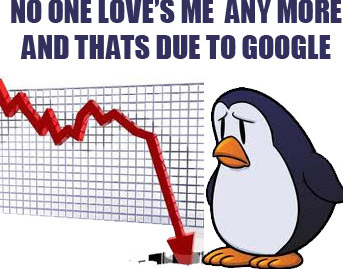
 Social Media could very well be at a crossroads. On one hand, you have Google who seems to want to cannibalize any and all of their services to support a system, Google +, that nobody outside of Google really wants to use. On the other hand, you have Facebook that has 900 million users, 34% of which indicate that they are losing interest and a company that now has to somehow generate a boat load of revenues to keep the dream alive and their investors happy and not jumping for the shore once the IPO shareholders sell window opens up. Now that’s a pretty tall task for any 28 year old whose whole business model is built around the promise that Facebook is “free and always will be.” Perhaps Mark should have learned from Google whose motto “don’t be evil” has led to the senseless hatred of panda’s and penguins everywhere.

As for the rest of us, new innovation fostered by freedom of thought and need will clearly help steer our appetite for better and more useful innovation in the months and years ahead. Where will all this come from? Who knows! But is it very likely where we know it will not come from. As Henry Ford was fond of saying “A market is never saturated with a good product, but it is very quickly saturated with a bad one.”

Friday, May 18, 2012

Google Penguin Got You Down?


Every year, Google makes around 500 changes to their search algorithm but when April of 2012 rolled around, Google unloaded a whopper in their Google Penguin release. A lot has been recently written about the impacts of this release and we are still measuring the effects. The bottom line is that a lot of websites were affected both positively and negatively and most people want to know why. Google won’t tell us because they make money selling their paid advertising which is the one thing they will help you understand.  What we do know is the following:

Link Building Just Became More Complicated

Receiving links from “irrelevant websites” can hurt you…and hurt you bad. Google now wants to see links coming from websites and web pages that are related to your website. If you are an attorney, you ideally want links for other legal related websites and web pages – not from Viagra sites and unrelated blogs. Getting relevant links is nothing new but now getting penalized for having bad links really is.

WHAT TO DO: Generate links from relevant websites and/or web pages. If you are a divorce attorney, try to get links from other divorce attorney websites, blogs and/or legal directories

Having good anchor text in a link has always been a good way to send signals to Google as to what the linked to page is all about and how to rank it for that term. The problem is that too much of a good thing looks unnatural to Google and they will now penalize you for it.

WHAT TO DO: Diversify the anchor text from your inbound links. Use a number of keyword variations and no keywords (eg your URL address) in some of your links as well. If a link’s anchor text reads “personal injury attorney”, it is best to have the anchor text on a website, blog and page that also makes mention of those same keywords in the text and tags.


Keyword Stuffing & Placement Just Became More Detrimental

Far too many law firms get hung up on ranking at the top for one or more specific search terms. This is certainly not a bad thing but it does come at the expense of where the majority of your traffic will come from: long tail search terms. Long tail search terms tend to be more case specific searches and commonly lead to higher conversions. These are also searches were you don’t typically see Google Places listings along with the organic search results which allows you to better compete outside of the Google Places envelope in which you reside.

WHAT TO DO: Diversify the optimization and keywords used in your title tags, H tags, and content on each page. They should read natural and not like a broken record.

Other Things to Consider

  • Unique content means more than just passing a copyscape test. Building unique content means creating unique content value that can be measured in natural inbound links, page views and citations from social media and other sources. 
  • Creating your own content and controlling those content locations have become even more important. Clearly it is effective to generate authority from relevant sources and the best way to do this is by creating and controlling your own by adding additional relevant websites, blogs, social media etc.
  • If you have seen a significant drop off in your website traffic since April 2012, the first place you need look is at your link building. In many cases, rogue link building that took place months and even years ago can now come back to bite you. Run a link analysis on your website and try to clean up all the bad links coming in. 
  • This will not be the last Penguin update so be prepared for more changes and gyrations in the months and years ahead. Clearly Google made some mistakes in this current release and as always, they will continue to tweet and tune as they move forward. Remember, Google makes their money by selling advertising, not in helping you understand why they intentionally keep you guessing.